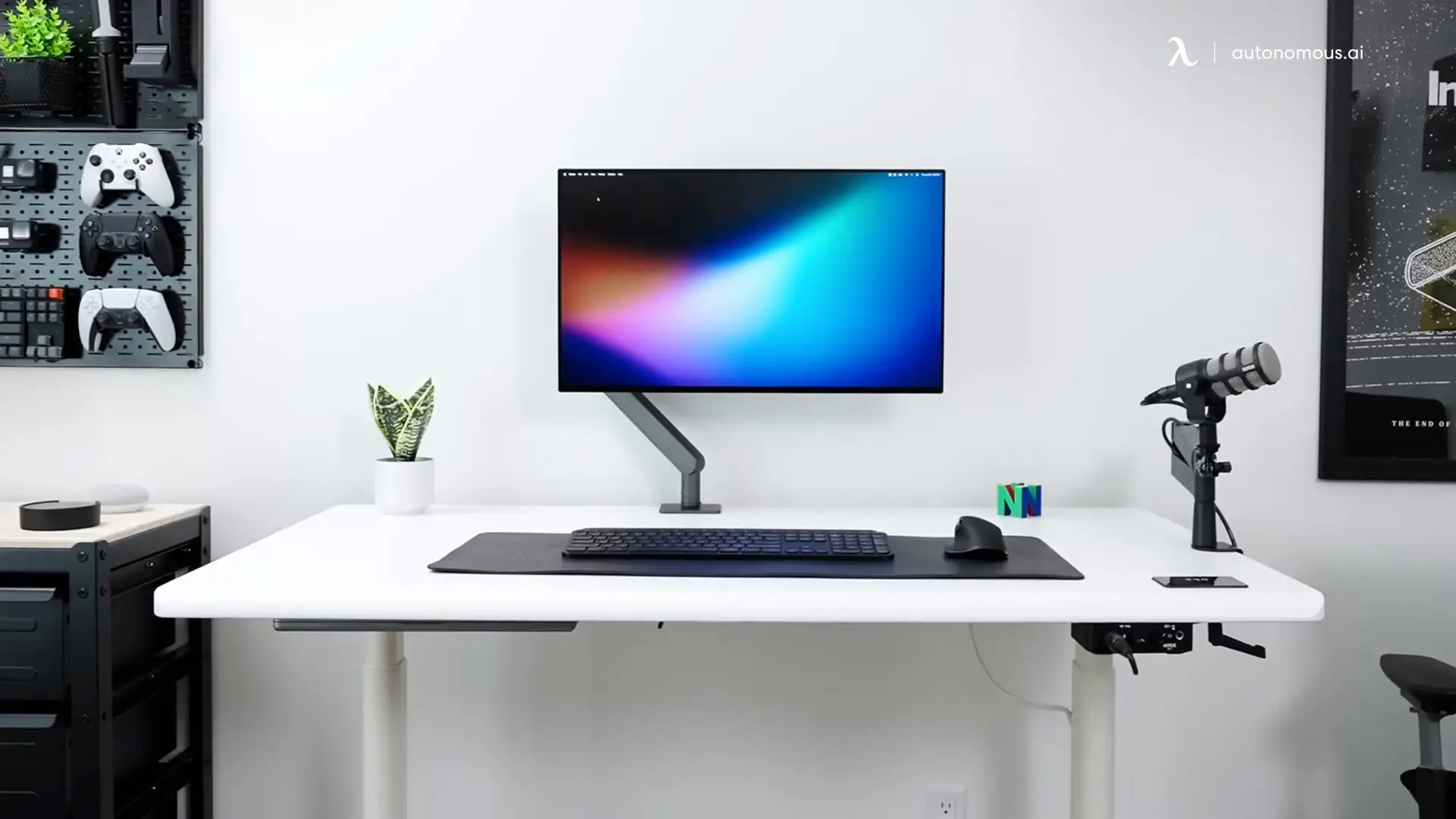
Cable Management for Standing Desks: Conquer Clutter & Maximize Space
The modern workspace has undergone a revolution, with standing desks becoming a staple for many seeking improved health and productivity. Yet, as our desks ascend and descend, the seemingly simple task of managing cables transforms into a perplexing challenge. What looked neat in the standing position often devolves into a tangled mess when lowered, leading to snags, accidental unplugging, and a general sense of disarray. Effective
standing desk cable management isn't just about aesthetics; it's about safety, efficiency, and creating a workspace that truly supports your well-being.
Gone are the days when cables could simply hang unseen behind a static desk. The dynamic nature of a standing desk brings every wire, brick, and power strip into plain view, especially with minimalist designs that leave little to hide. This article will guide you through comprehensive strategies and essential tools to transform your standing desk from a cable spaghetti monster into a sleek, organized command center.
Why Your Standing Desk Demands Smart Cable Management
Standing desks, with their inherent ability to move, introduce unique complexities to cable management that traditional desks simply don't face. When your desk transitions from seated to standing height, cables must have enough slack to accommodate the vertical travel without pulling tight, stressing connectors, or disconnecting entirely. Many users, myself included, have experienced the frustration of accidentally kicking or pulling a cable while stretching their legs in the seated position, only to find a monitor or peripheral suddenly go dark.
Beyond the movement factor, the open design of most standing desks means that cable clutter is far more exposed. A chaotic tangle of wires not only detracts from the clean lines of your modern setup but also creates a psychological burden. This is precisely why
Why Standing Desks Demand Smart Cable Management for Safety is such a critical consideration.
The Unseen Benefits of a Tidy Setup
Investing time and effort into proper
standing desk cable management yields a multitude of advantages:
*
Enhanced Safety: Loose cables on the floor are notorious tripping hazards, not just for you but for anyone else in your workspace. On the desk, tangled wires can lead to equipment falling if accidentally snagged.
*
Improved Aesthetics and Professionalism: A clean desk contributes to a more professional and inviting environment. Whether it's a home office or a corporate setting, a well-managed setup reflects attention to detail and a commitment to organization.
*
Increased Productivity and Focus: Clutter is a known distraction. By eliminating visual noise from tangled cables, you create a calmer, more focused workspace, allowing your brain to concentrate on tasks rather than visual chaos.
*
Equipment Longevity: Cables that are constantly tugged, kinked, or stressed are prone to damage. Proper management protects your valuable cables and power bricks, extending their lifespan and preventing costly replacements.
*
Simplified Troubleshooting: When every cable is neatly routed and possibly labeled, identifying a specific wire for unplugging or maintenance becomes a breeze, saving you time and frustration.
Essential Tools and Techniques for Standing Desk Cable Management
Achieving a truly clutter-free standing desk requires a combination of strategic planning and the right tools. Here’s how to build a robust system:
1.
Mount Power Strips & Surge Protectors Under the Desk: This is arguably the most impactful step. By mounting your main power strip directly to the underside of your desk, you consolidate all device power connections to a single point. This means only *one* power cord needs to run from your desk to the wall outlet. Use screws for a permanent hold or industrial-strength double-sided tape/Velcro if you prefer a non-drilling option. Ensure the power strip has enough outlets for all your devices and, ideally, includes surge protection.
2.
Utilize Cable Management Trays: A full-length cable management tray, attached horizontally under your desk, is a game-changer. These trays are perfect for housing the mounted power strip itself, as well as bulky power bricks, excess cable slack, and even smaller docking stations. They keep all the "ugly" components out of sight and off the floor.
3.
Embrace Velcro Cable Ties: While zip ties offer a super-secure hold, Velcro ties are superior for standing desks due to their reusability and flexibility. You can easily adjust bundles, add or remove cables, and maintain a tidy appearance without cutting and replacing ties constantly. Use them to bundle groups of cables together.
4.
Strategic Use of Adhesive Cable Clips and Mounts: For individual cables that need to be routed along the underside of the desktop or down a leg, self-adhesive cable clips are invaluable. They keep wires securely in place and prevent them from drooping. Choose strong adhesive types to ensure they withstand the movement of your desk.
5.
Cable Sleeves and Wraps: To further consolidate and beautify cable bundles, consider fabric cable sleeves or spiral wraps. These encase multiple wires, creating a single, clean conduit that looks much tidier than individual strands.
6.
Centralize with Docks and Hubs: A Thunderbolt 3 dock, USB-C hub, or similar peripheral consolidator can drastically reduce the number of individual cables running to your laptop or computer. Plug all your peripherals (monitors, keyboard, mouse, external drives) into the dock, and then run just a single cable from the dock to your primary device.
7.
Magnetic Cable Channels: For routing the main power cord from your desk frame down to the wall outlet, magnetic cable channels are an elegant solution. These often attach directly to a metal desk leg, concealing the cord and making it blend seamlessly with the desk's aesthetic. Some even come in colors matching common desk frames.
8.
Mind Your Cable Lengths: Avoid using excessively long cables, as the excess length only contributes to clutter. Conversely, ensure cables are *not too short*, or they will pull tight and potentially disconnect when the desk moves. Look for cables that are just right for your setup.
Your Step-by-Step Guide to a Clutter-Free Standing Desk
Ready to tackle the tangles? Follow this methodical approach to achieve optimal
standing desk cable management:
1.
Assess and Plan: Before you even touch a cable, identify every device connected to your desk. Sketch out where each device is located, where its cable originates, and where it needs to go. Note down power requirements and cable lengths. This planning phase is crucial.
2.
Disconnect Everything: A clean slate is essential. Unplug all devices and remove existing cable ties. Take this opportunity to wipe down your desk surface and the underside.
3.
Install Your Power Hub: Mount your power strip or surge protector securely under your desk, near the back edge or where it can best serve your devices. Position it so only one main power cable needs to run to the wall.
4.
Set Up Cable Management Trays: Attach your cable management tray(s) under the desk. These will be the primary housing for power bricks, excess cable slack, and the power strip itself if it fits.
5.
Route Main Desk Cables: Start with the non-negotiables: the standing desk's power cable, any Ethernet cables, and the single power cord from your mounted power strip. Route these down a desk leg, perhaps using magnetic channels or adhesive clips, towards your wall outlet.
6.
Connect and Organize Peripherals:
* Plug all your monitors, charging bricks, and other desktop peripherals into your newly mounted power strip or central dock.
* Route these cables backward from your devices, along the underside of your desktop, and into the cable management tray. Use adhesive clips to keep them from drooping.
* Bundle related cables (e.g., monitor power and display cable) with Velcro ties.
7.
Master Slack Management for Movement: This is where
standing desk cable management differs significantly. You need to create controlled slack for the desk's vertical travel. The best approach is to gather excess cable length within your cable management tray, forming gentle loops. These loops provide the necessary give as the desk moves up and down without letting cables hang loosely below the tray. Ensure that no cables are taut at either the highest or lowest desk position. For a deeper dive into this, check out
Master Standing Desk Cable Management: Tidy Wires & No Snags.
8.
Secure and Conceal: Use cable sleeves for larger bundles. Ensure all wires are firmly secured and out of sight as much as possible, adhering to the underside of the desk or neatly tucked into trays.
9.
Label Your Wires: As a final, invaluable step, label each end of your cables. This will save you immense frustration when you need to identify a specific cable later. Simple masking tape and a marker work wonders.
Maintaining Your Pristine Standing Desk Cable Management
Once your standing desk is beautifully organized, the goal is to keep it that way. Periodically check your setup to ensure cables haven't shifted, adhesive clips are still secure, and no new clutter has accumulated. The flexibility of Velcro ties makes adjustments easy. If you add or remove devices, integrate them into your existing system rather than letting new cables hang loose. Regular dusting will also keep your entire workspace looking fresh.
Conquering cable clutter at your standing desk is a highly rewarding endeavor. It transforms your workspace into a more functional, safer, and aesthetically pleasing environment. By implementing these strategies and utilizing the right tools, you'll not only maximize your space but also enhance your focus and overall well-being, proving that a little organization goes a long way in creating the ultimate productive setup.